Nature School Project: Ice and Heat Experiment
In this Martin & Sylvia: Nature School story “Impressions” As Sylvia and her friend Sofia spend some time considering the important people they’ve been learning about —such as Martin Luther King, Jr. and Malala — they make a surprise connection between these heroes and the fallen leaves they find in the ice.
We are joined by Dawn of Mud Puddles to Meteors who shares with us an ice melting experiment.
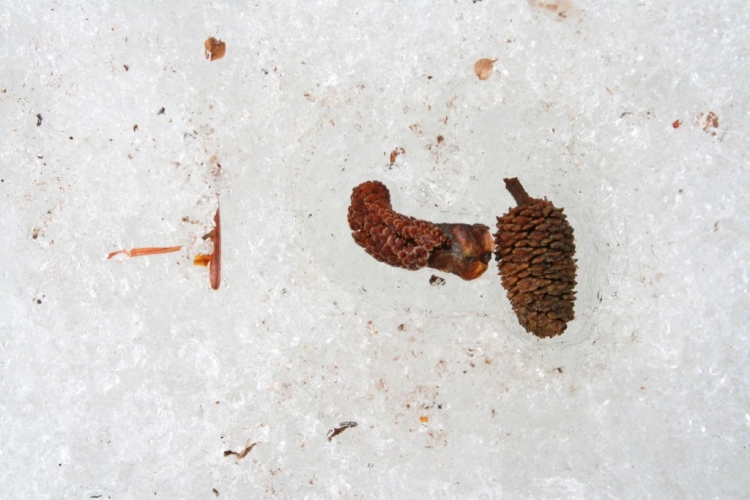
The other day when hiking along a creek we came across an area of ice that had lots of leaves, pine needles, and alder cones that had melted the ice underneath to make an impression. This led to a discussion about why that had happened and theories were tossed around.
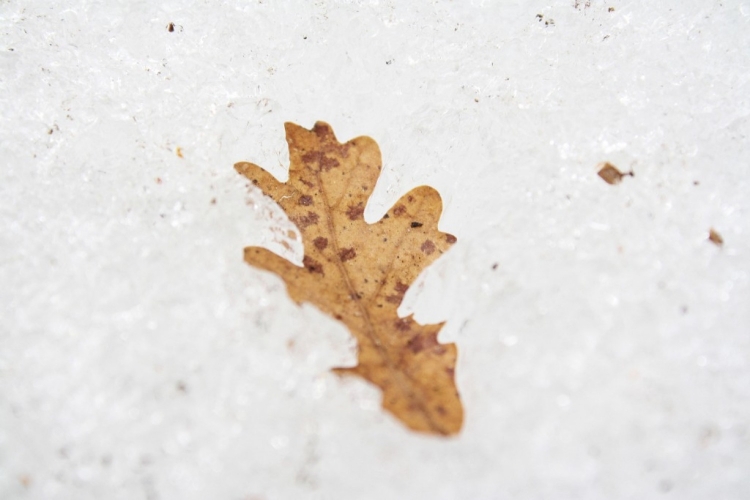
Finally the idea that darker things absorb heat was given and we observed how the darker things, like the alder cones and dark leaves, had made deeper impressions than the lighter colored leaves that had already begun to decompose.
Of course we had no idea which of these objects fell to the ice first and just how long they had been there; so a few days later we came up with a little experiment to test this theory.
What you need:
– Ice (cubes or disks – made in muffin tins)
– Bits of nature found around your yard
– A dish or light colored towel to hold the ice
– A bit of curiosity
What you do:
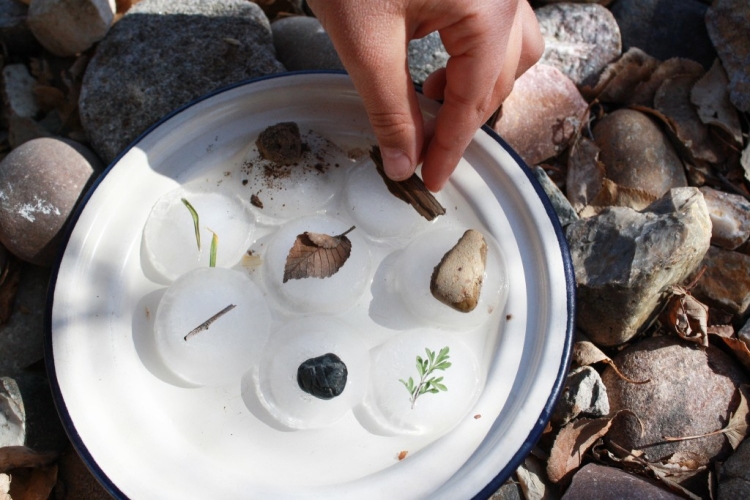
- Place the ice on the dish or towel.
- Find a small bit of nature for each piece of ice and place it on the ice.
- Ask some questions about which items might make the ice melt faster and why.
- Observe. At this stage there was a lot of picking up to check on the progress of the ice melt. We came back to observe approximately every 10 min. It was a really warm day so our ice was melting fast.
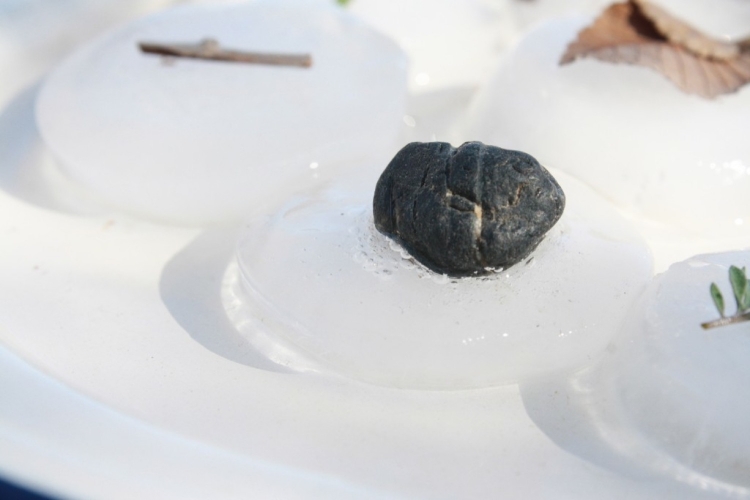
The darker objects made an impression much faster than the rest. The black rock started melting the ice right away. We discussed how the rocks had an advantage to start because they had already absorbed some heat before being placed on the ice and brought that heat with them. This lead to questions about why some things retain, or hold onto, their heat more than others.
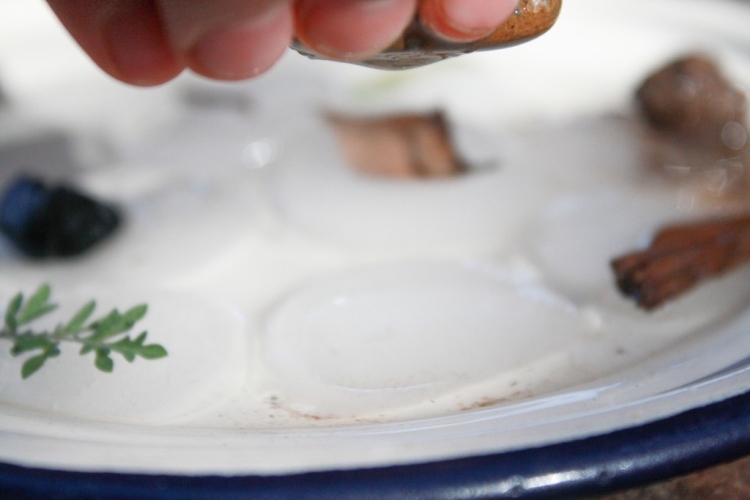
In the future it might be fun to place all of the objects in the freezer (or at least the shade on a very cold day) before starting the experiment.
What is going on here? Why do dark objects get warm?
Heat and light are different types of energy, but light can be converted into heat. Since dark objects absorb all the wavelengths of light heat is produced. White objects reflect all of the wavelengths so little heat is produced.
This is why it is better to wear darker clothes when venturing out on a cold winter day and lighter clothes on those hot, steamy days of summer.