
The Real Life Benefits of Make Believe
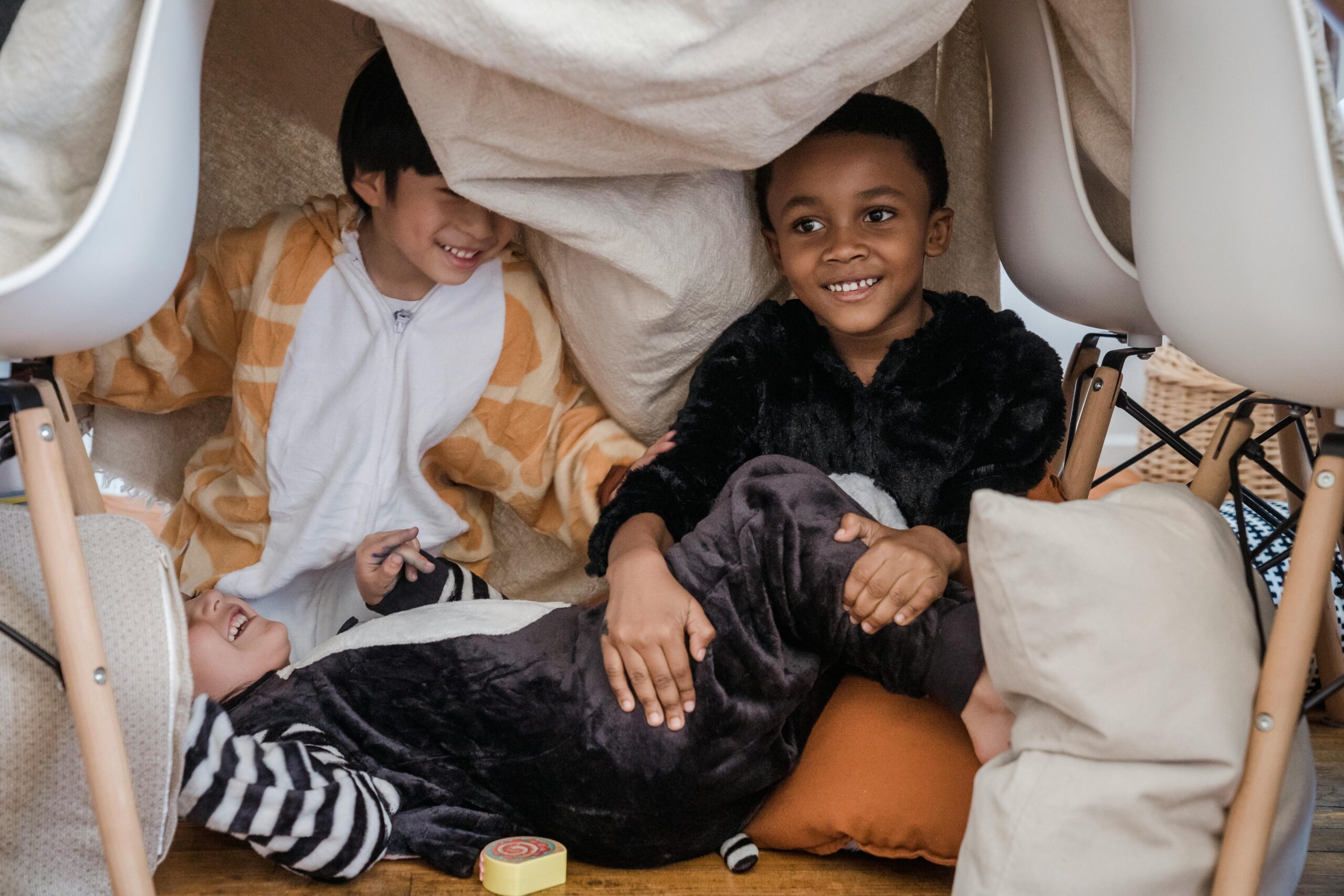
Perhaps you’ve seen this scenario play out in your own home: one moment, the couch looks nice and tidy, everything in its right place. Ten minutes later, cushions, pillows, and blankets have been reassembled in the TV room to form one of those makeshift habitats known as a “pillow fort.” Somewhere underneath this ramshackle structure, your kids -and possibly the family dog- are in the process of planning an extension. While pillow forts and other forms of play may seem like silly fun -because they are- they’re also serious business. Whether your children are coming up with the newest, most innovative ideas in the pillow fort industry, playing a good old-fashioned game of hide-and-seek, or using their imaginations to create a make-believe world filled with their own characters, they’re also making big strides towards helping their brains develop.
It’s true: when kids engage in playtime, what they’re doing is more than just having fun; they’re actually participating in activities that are important for helping them develop in multiple ways. Here are a few cognitive skills that develop when you allow your child to engage in their favorite playtime activities.
What‘s Actually Happening in That Pillow Fort

One of the many benefits of playtime is that it helps children develop emotional regulation as their brains mature. Think of it as a practice space for learning appropriate behavioral responses, navigating social interactions with their peers, and processing their feelings.
Familiarizing themselves with these concepts within the low-stakes world of make-believe and game-playing goes a long way towards helping children prepare for some of the real-life challenges and interactions they’ll encounter as they mature.
- Self Awareness – During structured games with rules or roleplays in the realm of make-believe, children begin to learn about their own emotions and how they can have a positive or negative impact on the way they think and behave.
- Impulse Control – Whether it’s waiting their turn in a board game, following the rules in a game of tag, or roleplaying an imaginary scenario, children begin to learn coping skills like patience, managing their frustration, and cooperation.
- Empathy – By interacting with others during play, children gain insights into the viewpoints and emotions of their peers and the people around them.
- Social Skills – Children begin to learn how to manage relationships through play, which includes learning conflict resolution, communication skills, and how to effectively collaborate towards a greater goal.
The Brain’s Organizing System — And How Play Strengthens It
Our executive function is the area of the brain – the frontal lobe – that works as a kind of “air traffic controller” of the mind. Executive function is important for our ability to regulate our emotions, manage time, evaluate and adjust our own behaviors as needed, and maintain cognitive flexibility. Playtime is an important way to nurture these skills.
So, how does playtime work to help enhance executive function in children? Let’s go back to our earlier example about building a pillow fort. When we look at what a child is doing while engaging in this activity, we see them putting together a plan with multiple steps to reach their goal of building the ultimate pillow fort. This requires the proper building materials (blankets, pillows, cushions, sheets, maybe a chair or two, or a table for structural support), which requires working memory. All of these are examples of a child exercising their executive function.
The Pillars of Executive Function in Children
- Working Memory – Remembering how to play a game, retaining information, or following directions step-by-step are all examples of how children use working memory during playtime activities.
- Cognitive Flexibility – When someone “thinks outside the box,” they’re using their cognitive flexibility. This ability allows us to change our focus, jump from one activity to another, adapt to unforeseen changes, and see a situation from multiple perspectives.
- Inhibitory Control – This allows us to think and consider our options and the possible outcomes before making decisions. The opposite of being impulsive, inhibitory control helps children exercise their ability to stay focused,
Plot Twist: Tea Parties are Educational
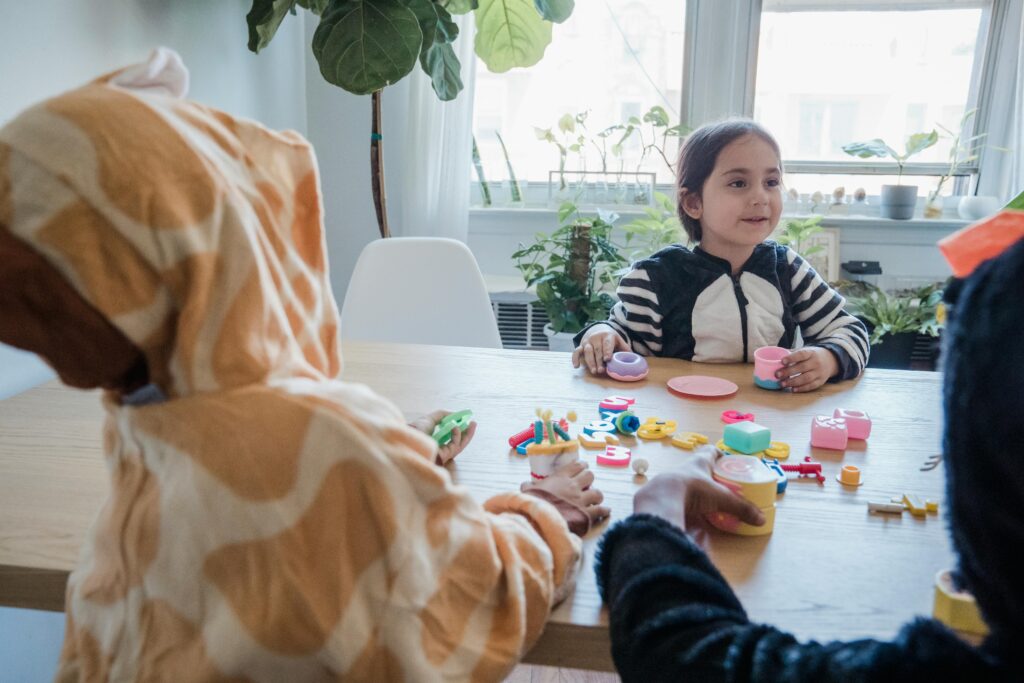
Children often engage in narrative role-play, which can involve activities such as playing house, fantasy and adventure games like superheroes and villains, and acting out characters from their favorite stories, just to name a few. No matter what their imagination conjures, these playtime activities are excellent for building their narrative thinking skills.
Let’s say a child is pretending to be a princess who’s holding a tea party for her stuffed animals. This requires her to play the role of actor, protagonist, and author of this imaginary world. In these imaginary scenarios, children are tasked with contemplating topics such as sequencing and plot development, exploring character motivation, problem-solving, and world-building.
All of these concepts work together to help children build a mental architecture that, over time, will help them construct their own self-identity, find new ways to process and interact with the world around them, enhance their emotional literacy, and deepen their social comprehension.
All the World’s a Stage (Especially the Living Room)
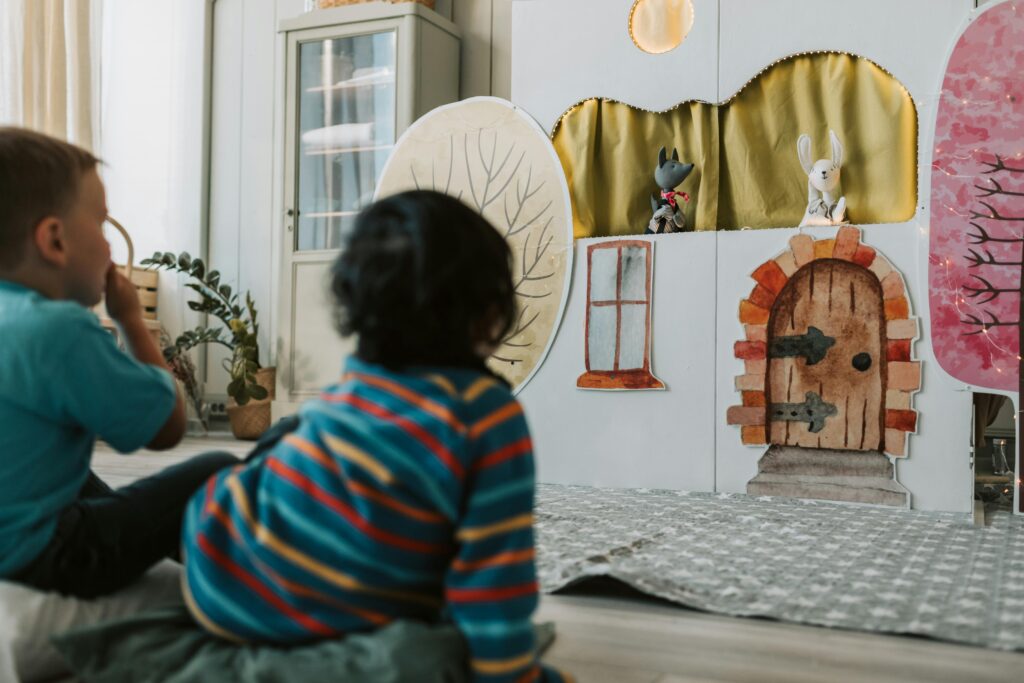
- Character – Understanding characters in an imaginary playtime setting helps children’s minds open up to greater concepts like identity, a character’s motivation, and empathy. By playing different characters -imaginary or otherwise- children learn to explore different ways of being.
- Setting – Going beyond just the physical location, setting allows for children to create the contexts, specific boundaries, and the rules within an imaginary scenario.
- Timeline – This is important, as the timeline creates a linear boundary, which serves to keep the narrative structured.
- Plot – The plot can be seen as the cause-and-effect that connects a chain of events from beginning to end in a way that makes logical sense.
- Conflict – Understanding the conflict or obstacle to be overcome is an important part of play, as it creates a safe place for children to problem-solve in a make-believe environment.
- Resolution – The ultimate payoff when faced with tension and problem-solving is the resolution, which children use to discover solutions and find closure in the narrative.
Bouncing Back, One Board Game at a Time
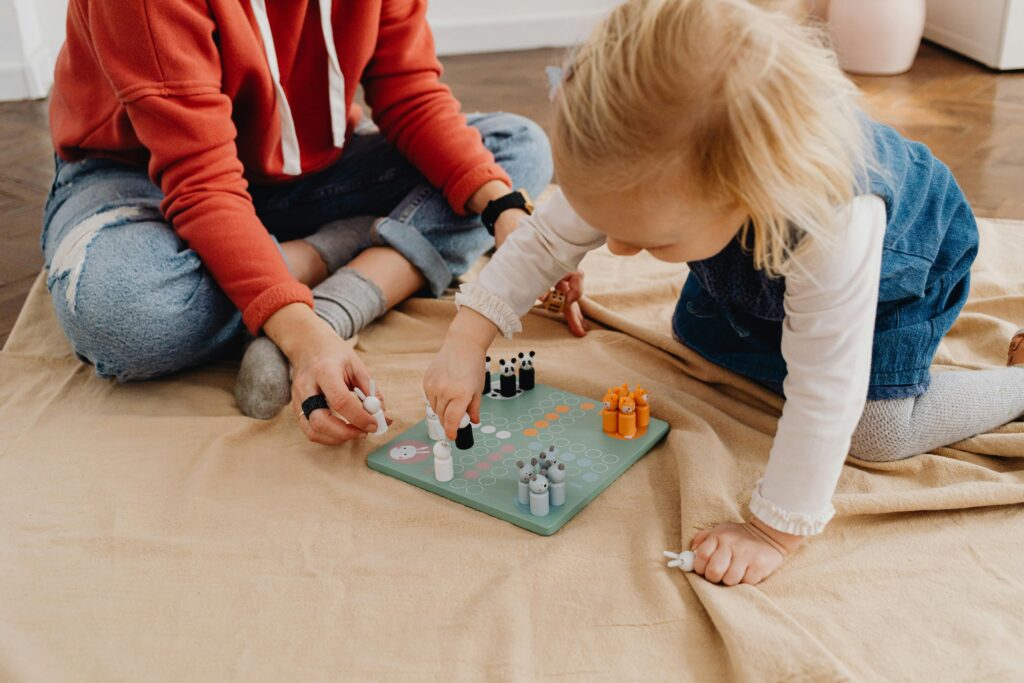
Whether it’s hide-and-seek, playing with dolls, checkers, or Chutes and Ladders, playtime and the peer interactions that go along with it have a powerful way of helping kids gain confidence and become more resilient.
Pillars of Resilience in Children
- Problem Solving – Playing games is an excellent way for children to learn how to learn from their mistakes and strategize. Something as simple as a wrong move in a game of checkers is often a learning opportunity and a chance to learn how to adapt during gameplay, a skill that will come in handy throughout their lives.
- Self-efficacy – Games and playtime are instrumental in helping children gain confidence in their ability to succeed. Through trial and error, they build confidence through their own successes or by simply witnessing the successes of others.
- Social Support – By playing with their peers, children develop a collaborative place where relationships are built, tested, and maintained. This time is an effective way for children not only to receive support but also to give it, through validating each other’s ideas and sharing their imaginations.
So, the next time you walk into a room to the sight of a dismantled couch, take a deep breath and let your kids experiment and build for a while before asking them to clean up. What may seem like a chaotic pile of cushions and blankets is actually a cognitive laboratory where your kids minds are expanding through the simple act of engaging in a fun activity. In time, the hours they spend at play can pay off in multiple ways and make them more adept at regulating emotions, solving complex problems and bouncing back from setbacks. For all they gain, a room strewn with pillows and blankets is a small price to pay.
Play is such a big part of Sparkle Stories that we have an entire topic dedicated to it which includes 11 collections and 25+ original audio stories. You can listen to our entire collection on Play here.
Not yet a subscriber? Start a 10-day free trial HERE.
About the authors
-

Matt Gordon
Copywriter and Customer Service RepresentativeMatt Gordon is a copywriter, eCommerce writer, and blogger, and currently resides in Chicago, Illinois, where he faithfully cheers on the Cubs.